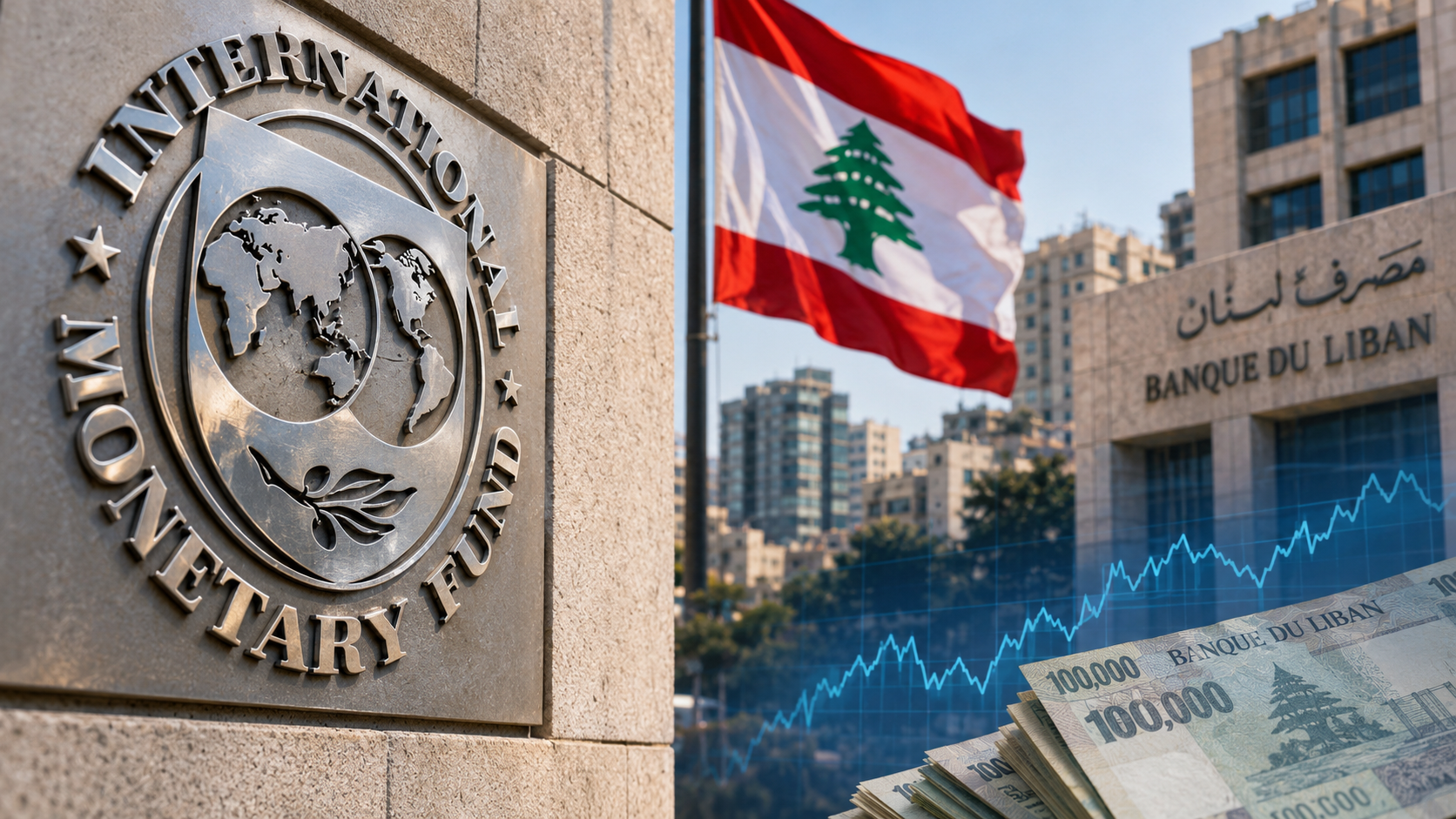
The discussions began Tuesday, November 10, in Beirut and are expected to continue through Friday, with Lebanese officials hoping to secure a renewed preliminary agreement with the IMF.
Finance Minister Yassine Jaber said that intensive meetings would take place throughout the week, stressing that reaching an agreement in principle remains the government's immediate priority.
"The adoption of the financial gap law is what currently prevents us from reaching a program with the IMF," Jaber said during a press briefing following the opening of negotiations.
Banking Losses Remain the Main Obstacle
The proposed financial gap law seeks to establish how losses resulting from Lebanon's 2019 financial collapse should be distributed among the state, the Banque du Liban (BDL), commercial banks and depositors.
Before the crisis, Lebanon's banking system served nearly one million depositors, many of whom have since been unable to access their savings.
The government submitted the draft legislation to Parliament in 2025, but lawmakers have yet to approve it amid objections from parts of the banking sector and several political parties.
Disagreements over the scale of financial losses and the mechanisms for distributing them have repeatedly complicated negotiations with the IMF.
In 2022, Lebanese authorities estimated banking sector losses at approximately $70 billion. That figure is believed to have increased as the crisis has remained unresolved for seven years.
IMF Demands Further Financial Reforms
The IMF reached a preliminary staff-level agreement with Lebanon in April 2022, outlining a financial assistance program conditional on implementing structural and financial reforms.
Although Parliament subsequently adopted legislation reforming banking secrecy and restructuring the banking sector, the financial gap law remains a critical outstanding requirement.
Jaber emphasized that restoring a functioning banking system is essential to Lebanon's economic recovery.
"Lebanon cannot continue with an economy based exclusively on cash and without an effective banking sector," he said.
According to the minister, adopting the legislation would mark the beginning of a resolution to the banking crisis and help restore confidence in financial institutions.
Economic Recovery Threatened by Regional Conflicts
Lebanon's financial collapse, which began in 2019, severely undermined public confidence in the banking sector, restricted access to deposits and accelerated the country's transition toward a cash-based economy.
Efforts to stabilize the economy have been further complicated by successive conflicts between Israel and Hezbollah since 2023, which have damaged infrastructure, disrupted economic activity and delayed recovery initiatives.
In August, the World Bank projected that Lebanon's economy would contract by 6.4% in 2026, highlighting the continued economic consequences of political instability and armed conflict.
A Critical Week for Lebanon's Financial Future
The renewed negotiations represent another attempt to unlock international financial assistance and establish a framework for addressing Lebanon's banking losses.
However, any breakthrough will depend on the authorities' ability to overcome political disagreements and advance the remaining legislative reforms.
A new agreement with the IMF could provide an important foundation for rebuilding the banking sector, restoring depositor confidence and attracting international financial support.
For now, the financial gap law remains the central obstacle separating Lebanon from a comprehensive IMF-supported recovery program.